
G-TEC members examine complex treatment decisions in two DR-TB cases
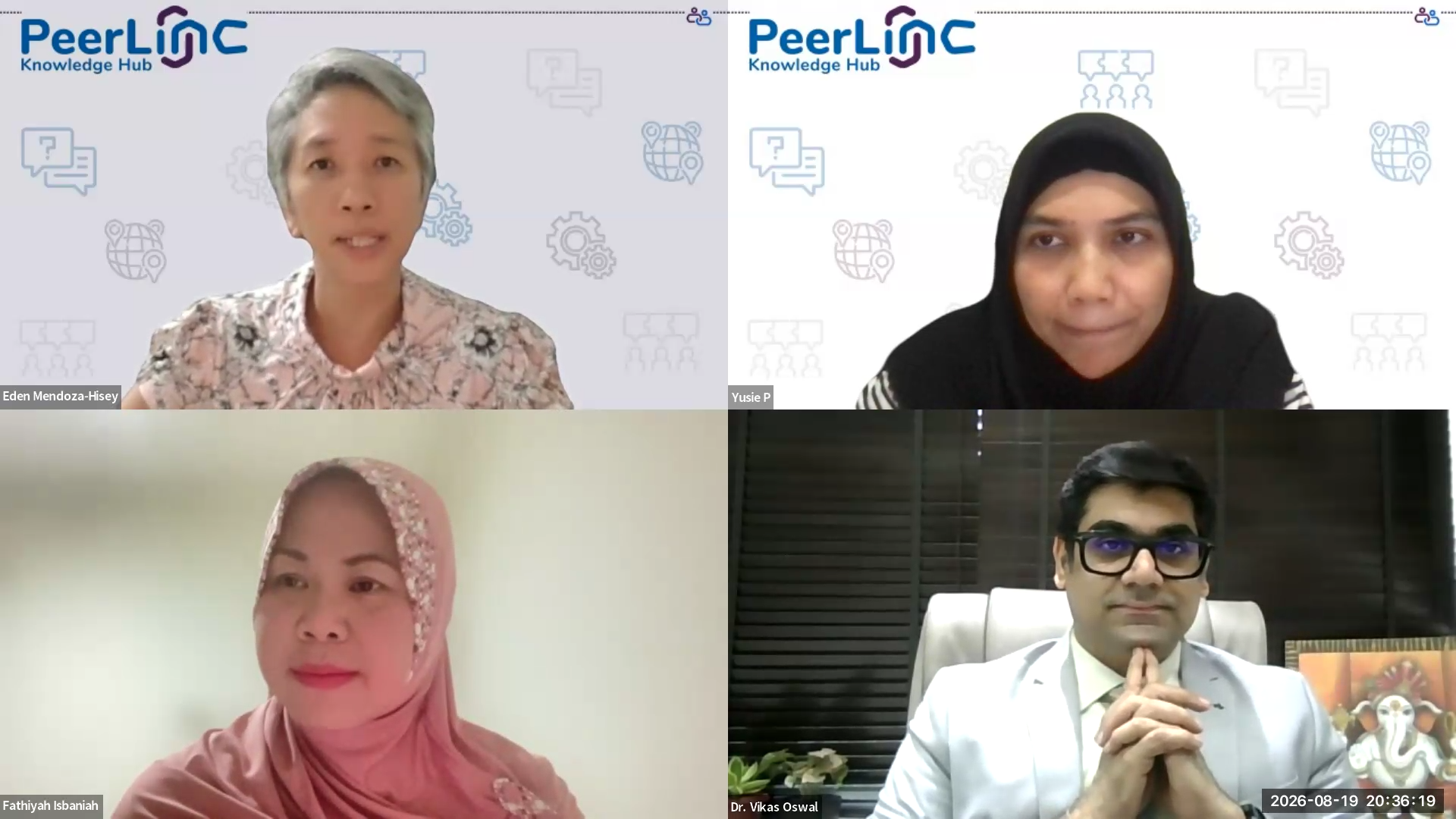
Members of the Global Technical Expert Council (G-TEC) came together on 19 August 2026 for an online clinical case discussion examining the difficult decisions that can arise when drug-resistant tuberculosis (DR-TB) does not respond to treatment as expected.
Convened by the PeerLINC Knowledge Hub, the session featured two cases from Indonesia and India as opportunities for learning and discussion. The presentations explored different but closely related challenges: managing recurrent treatment failure as drug resistance and adverse events narrow the available therapeutic options, and determining when to consider surgery if microbiological improvement does not resolve extensive structural lung damage.
Responding to recurrent treatment failure
Dr. Fathiyah Isbaniah of Indonesia presented the treatment history of a patient with extensively drug-resistant tuberculosis (XDR-TB) following repeated episodes of treatment interruption and missed follow-up visits.
The case traced the patient’s progression from drug-susceptible TB to rifampicin-resistant, pre-XDR, and eventually XDR-TB. Changes in drug-susceptibility testing results, recurrent positive sputum examinations, previous exposure to multiple medicines, and adverse events all had to be considered in designing an effective regimen.
The presentation also highlighted the clinical and programmatic complexity surrounding treatment continuity. As resistance limited the medicines that could be used, the care team had to balance microbiological findings with the patient’s treatment history and tolerance of individual drugs. When the patient developed tinnitus suspected to be related to amikacin, the regimen had to be reassessed once again.
G-TEC members discussed the importance of reviewing the complete treatment history, repeating drug-susceptibility testing when clinically indicated, managing adverse events promptly, and supporting patients to remain engaged in care. The case demonstrated how treatment interruption can complicate future regimen design and why difficult cases benefit from multidisciplinary expert review.
The case also underscored the broader value of shorter, simpler, and better-tolerated treatments. By making treatment easier to complete, these regimens can reduce the risk of interruption and treatment failure—and help prevent some people from developing the increasingly complex resistance patterns and limited therapeutic options that make cases like this so difficult to manage.
Looking beyond microbiological results
The second case, presented by Dr. Vikas Oswal of India, followed an adolescent with rifampicin-resistant TB, evolving fluoroquinolone resistance, persistent culture positivity, and severe unilateral lung destruction.
Dr. Oswal’s presentation, titled When Microbiological Cure Is Not the End, examined how microbiological and radiological findings can tell different parts of a patient’s story. Although the patient ultimately achieved sustained culture negativity and was declared cured, imaging continued to show extensive structural damage in one lung.
The case prompted discussion on when surgery may be considered as an adjunct to medical treatment. For carefully selected patients, resection of severely damaged or persistently diseased lung tissue may contribute to care when it is undertaken alongside an effective treatment regimen and supported by appropriate surgical expertise.
Among the central lessons were the value of serial drug-susceptibility testing, the need to investigate recurrent positivity rather than assume that the resistance profile has remained unchanged, and the importance of assessing residual structural disease even after microbiological control has been achieved.
Learning across settings
Together, the two cases showed that complex DR-TB management rarely rests on a single test result or clinical decision. It requires clinicians to continually bring together microbiology, imaging, treatment history, adverse-event monitoring, patient circumstances, and the expertise of a multidisciplinary team.
The discussion also demonstrated the role of G-TEC as a peer-learning and expert-support platform for clinicians managing complex DR-TB cases. By bringing together members with experience in clinical care, TB programme implementation, laboratory interpretation, and treatment design, G-TEC creates an opportunity to examine difficult cases from multiple perspectives and draw practical lessons that may be adapted across settings.